Quartz Vs Quartzite: Which Is Better For Your Kitchen Renovation NJ?
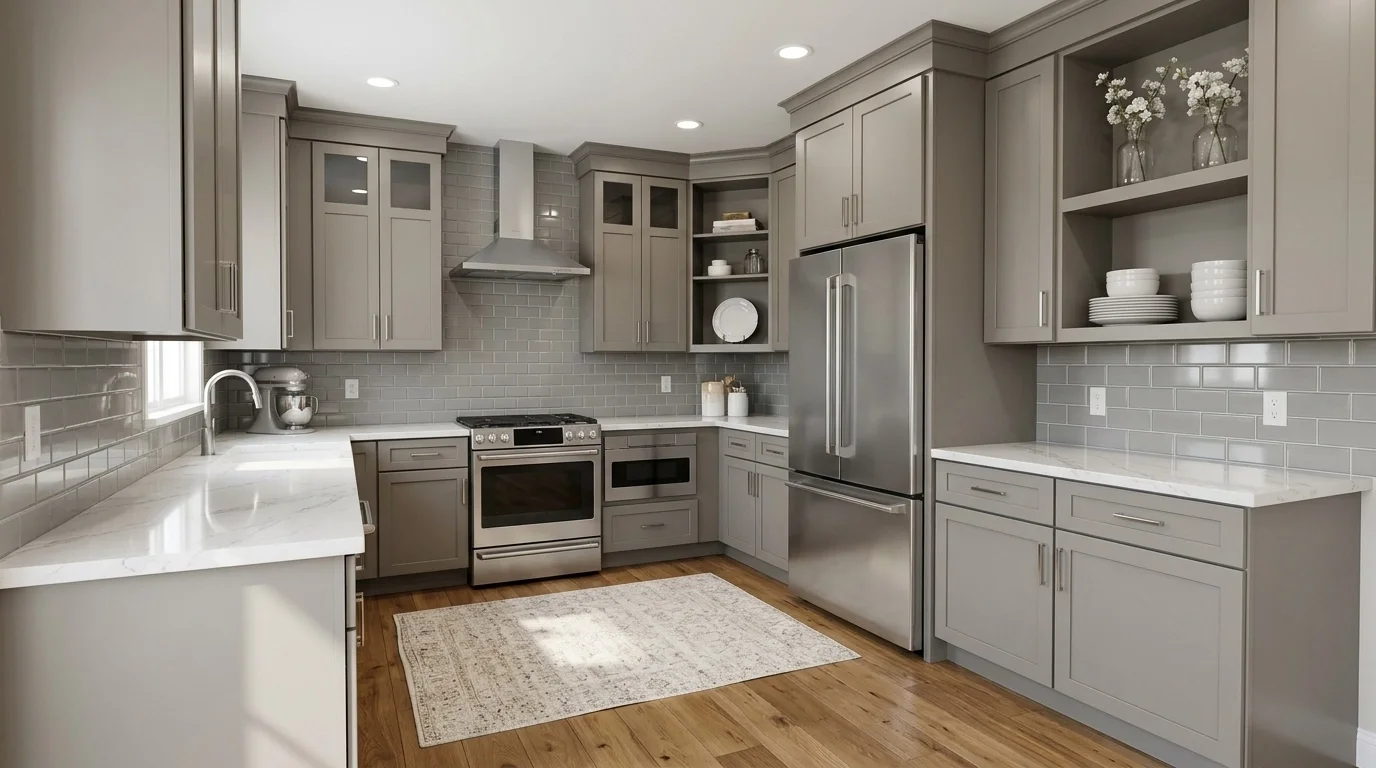
Quartz
You’re standing in a showroom in Monmouth County, surrounded by slabs of stone that all look beautiful, but you’re feeling more confused than when you walked in. Your contractor is asking for a decision, your budget is on the line, and you’re stuck on one question: Quartz or Quartzite?
They sound almost identical. They both look incredible in a modern New Jersey kitchen. But beneath the surface, they are fundamentally different materials with different rules for care, durability, and cost.
At S. Sexton Design Associates, we’ve spent 25 years helping homeowners across Middlesex, Monmouth, and Ocean County navigate these exact crossroads. We don't just pick pretty colors; we ensure the materials you choose fit your actual lifestyle. Let’s cut through the noise and look at the logic behind choosing between Quartz and Quartzite for your kitchen remodel.
The Engineered Workhorse: What Is Quartz?
When people talk about "Quartz," they are talking about an engineered product. It isn't pulled from the earth in a solid slab. Instead, it’s a man-made cocktail of roughly 90-95% crushed natural quartz crystals bound together with polymer resins and pigments.
Think of Quartz as the "reliable teammate" in your kitchen. Because it is engineered, it offers a level of predictability that natural stone simply can't match.
Why NJ Homeowners Love Quartz
Non-Porous Perfection: Because of the resin binders, Quartz is completely non-porous. It won't soak up that spilled glass of red wine or the olive oil from last night’s dinner.
Zero Maintenance: You never have to seal Quartz. Ever. For busy families in Ocean County who don't want another item on their "to-do" list, this is a massive win.
Design Consistency: If you fall in love with a sample in the showroom, the slab that arrives at your house will look exactly like it. There are no surprises, no hidden veins, and no "imperfections."
Vast Style Options: Whether you want a clean, minimalist white or a surface that mimics the look of Calacatta marble, Quartz can do it.
The Catch with Quartz
There is one major weakness: Heat. The resins that hold Quartz together can melt or discolor if they get too hot. If you take a boiling pot of pasta off the stove and set it directly on your Quartz counter, you risk a permanent scorch mark. Trivets aren't just a suggestion; they are mandatory.
The Natural Masterpiece: What Is Quartzite?
Quartzite is a different beast entirely. It is a 100% natural stone. It started its life as sandstone and was transformed by intense heat and pressure deep within the earth into the hard, crystalline rock it is today.
If Quartz is the reliable teammate, Quartzite is the "star of the show." It offers a depth and movement that man-made materials struggle to replicate.
Why Quartzite Stands Out
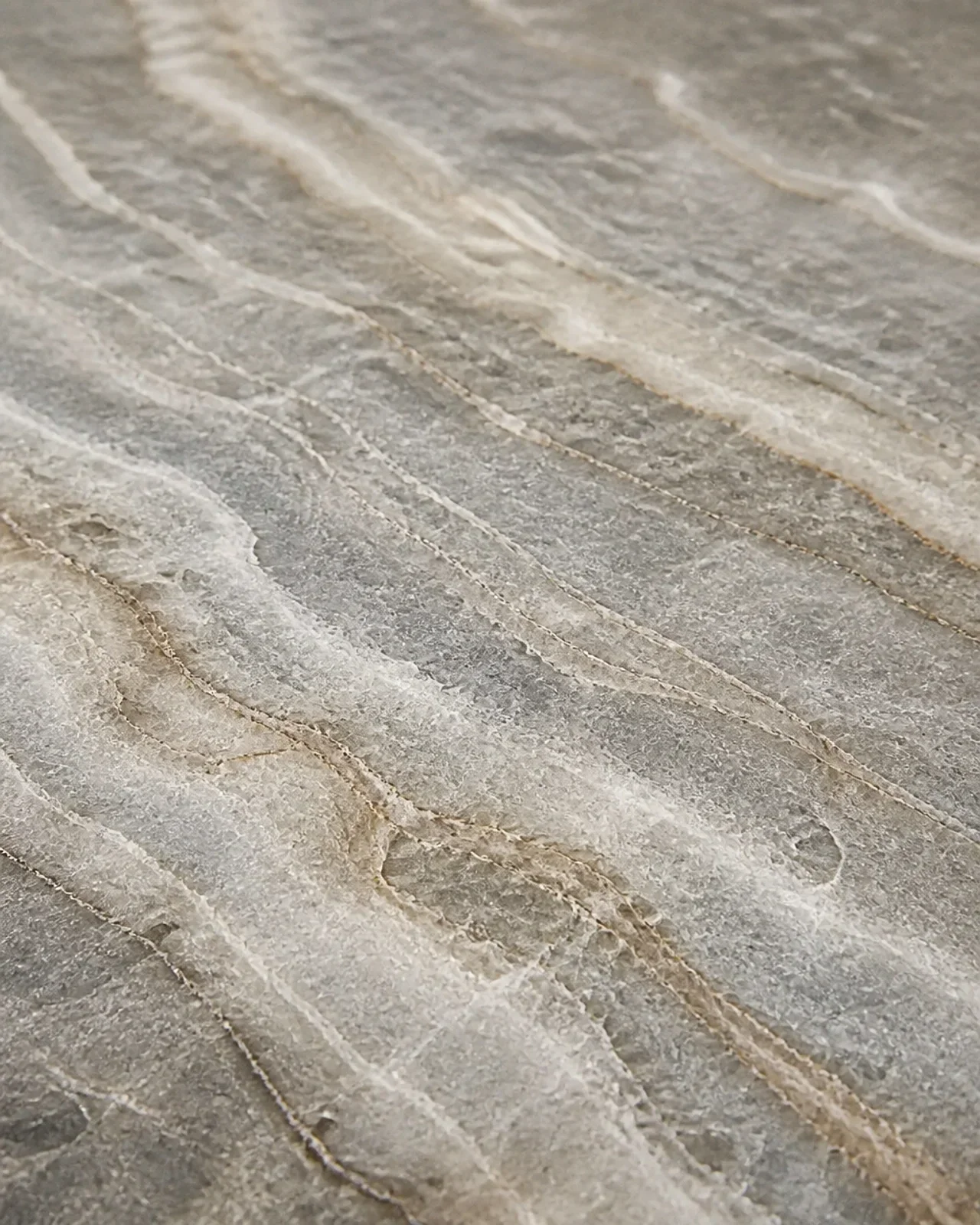
Quartzite
Unique Artistry: Every single slab is a one-of-a-kind original. No two kitchens with Quartzite will ever look exactly the same.
Extreme Hardness: Quartzite is actually harder than granite. It is incredibly resistant to scratches and etching.
Superior Heat Resistance: Since it was literally forged in the earth’s furnace, Quartzite laughs at hot pans. You can place a hot tray directly on the surface without the fear of melting.
Natural Elegance: It possesses a crystalline sparkle and soft, flowing veins that give it an organic, high-end feel.
The Catch with Quartzite
Because it’s a natural stone, Quartzite is porous. This means it requires regular sealing, usually once every year or two, to prevent staining. It’s a commitment. If you aren't the type of person who wants to maintain your stone, Quartzite might eventually break your heart with a permanent stain.
The Head-to-Head Comparison
To make the right choice for your New Jersey home, you need to look at how these materials stack up in the areas that matter most.
1. Durability and Hardness
Quartzite takes the win here for raw hardness, but Quartz is more flexible. Natural stone can be prone to chipping if a heavy pot hits an edge just right. Quartz, thanks to those resins, has a bit more "give," making it slightly more impact-resistant.
2. Maintenance Requirements
This is the biggest differentiator.
Quartz: Wipe and go. No sealing.
Quartzite: Requires periodic sealing. You also have to be more careful with acidic cleaners or lemon juice, which can dull the finish if the seal has worn thin.
3. Aesthetic Choice
Do you value symmetry or soul?
Choose Quartz if you want a controlled, specific look. It’s perfect for modern, contemporary, or transitional designs where you want the countertop to support the overall aesthetic without being "loud."
Choose Quartzite if you want a "wow" factor. It’s the centerpiece. It’s for the homeowner who appreciates natural variations, small inclusions, and the story that a natural material tells.
4. Cost Considerations in NJ
Generally, Quartzite is the more expensive option. In the Monmouth and Middlesex County markets, you can expect to pay a premium for Quartzite due to the cost of quarrying and the difficulty of fabrication (since it's so hard, it’s tougher on the fabricator's tools).
Quartz pricing is more tiered, making it easier to find an option that fits a specific budget without sacrificing quality.
Avoiding the "Costly Mistake" Trap
We see it all the time: a homeowner falls in love with a slab of Quartzite but leads a lifestyle that doesn't allow for maintenance. Or, they choose a low-end Quartz only to realize it doesn't have the "depth" they were hoping for in their dream kitchen.
This is why we created the Confident Kitchen Guide. It’s a digital roadmap designed to stop the second-guessing. Before you sign a contract or commit to thousands of dollars in stone, you need a plan that covers layout, materials, and contractor vetting.
The Verdict: Which One Is For You?
Choose Quartz if: You want a beautiful, "set-it-and-forget-it" kitchen that looks modern, clean, and requires zero extra work from you over the next twenty years.
Choose Quartzite if: You are a "purist" who loves natural beauty, you do a lot of high-heat cooking, and you don't mind the small ritual of sealing your stone to preserve its unique character.
